Meta‑Analysis Report: Public Health Conditions in Rural Guatemala & the Impact of Dr. Eliseo Pelico’s Clinic in Aldea Pitzal
Rural Guatemala faces some of the most severe health disparities in Central America, driven by geographic isolation, linguistic exclusion, chronic underfunding, and the near‑total absence of Indigenous‑speaking clinicians. This meta‑analysis synthesizes available public health data with on‑the‑ground findings from Aldea Pitzal, where Dr. Eliseo Pelico—the only 24‑hour urgent care provider in the region and one of the few fluent in K’iche’, Spanish, and English—is delivering a model of community‑rooted, linguistically inclusive care.
The deployment of a Philips HD11 ultrasound system, the integration of the 75Health EMR, and the translation of all clinical materials into K’iche’ have produced measurable improvements in diagnostic capacity, maternal health, and patient retention. Using the Community Impact Measure (CIM), we estimate a threefold increase in clinical impact from 2024 to 2025.
1. Public Health Disparities in Rural Guatemala
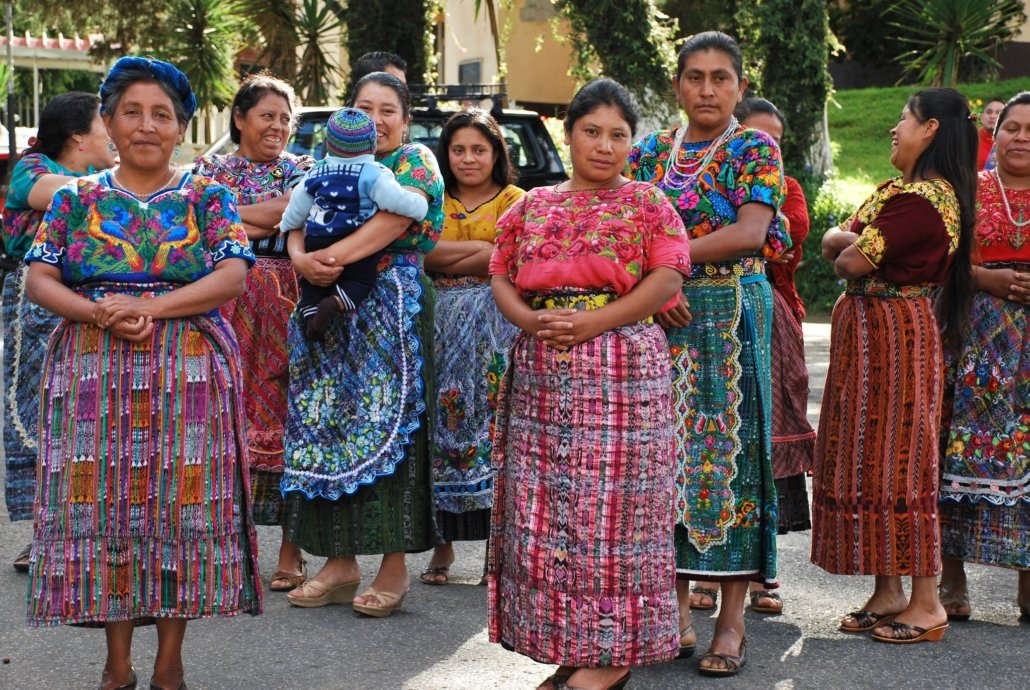
A group of women stand outdoors wearing vibrant, traditional Guatemalan clothing with intricate woven patterns and embroidered designs. One woman holds a baby dressed in modern clothing. The scene captures everyday life and cultural identity in a rural Indigenous community surrounded by greenery.
Rural Guatemala faces a convergence of structural barriers that make basic healthcare difficult to access: geographic isolation, chronic underfunding, linguistic exclusion, and extreme poverty. Indigenous communities—especially K’iche’-speaking populations—experience the highest burden of disease and the lowest access to diagnostic services. This section outlines the systemic disparities that shape health outcomes in regions like Aldea Pitzal and establishes the urgent need for community‑rooted, culturally aligned medical care.
1.1 Geographic Barriers
80% of physicians in Guatemala are concentrated in Guatemala City.
Rural Indigenous communities often travel 3–6 hours to reach a diagnostic facility.
Transportation costs can exceed Q100–Q150, often more than a family’s weekly income.
1.2 Economic Barriers
Private clinics charge Q300 ($40 USD) per visit.
Rural families often earn Q15–Q25 per day.
This makes a single medical visit equivalent to 2–3 days of income.
1.3 Linguistic Barriers
Guatemala has 25 Indigenous languages.
40% of the population identifies as Indigenous.
Fewer than 1% of clinicians in rural regions speak K’iche’.
Miscommunication leads to misdiagnosis, mistrust, and avoidance of care.
1.4 Structural Underfunding
Guatemala spends $97 per capita on healthcare (vs. $7,000+ in the U.S.).
Rural clinics lack imaging, labs, EMRs, and continuity systems.
These disparities create a perfect storm: distance + cost + language + underfunding = preventable suffering.
2. Field Findings: Aldea Pitzal & Dr. Eliseo Pelico’s Clinic
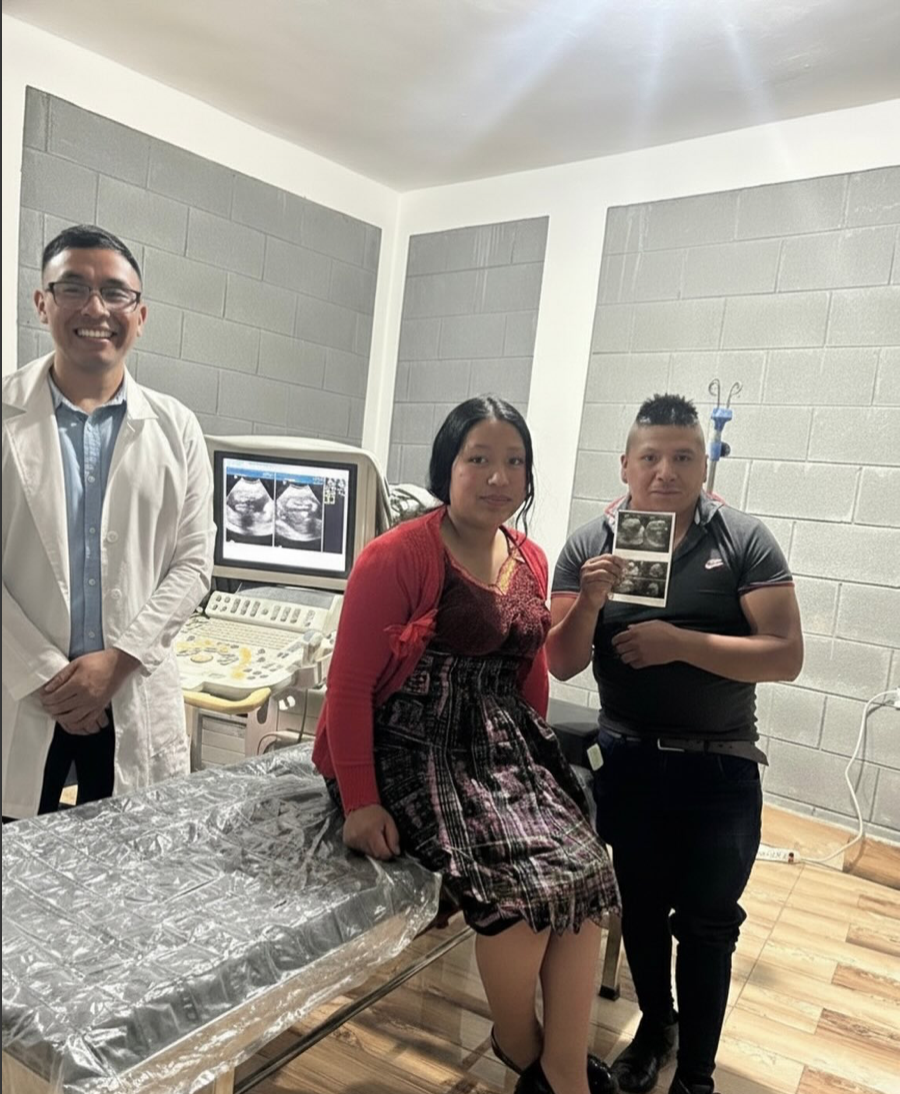
A doctor in a white coat stands beside an ultrasound machine displaying two sonogram images, while a patient sits on an exam table and another person holds printed ultrasound photos. The setting is a modest clinic room with concrete walls and basic medical equipment, capturing a moment of community‑based healthcare in rural Guatemala.
Aldea Pitzal represents the lived reality behind national statistics. Here, families often travel hours for care, face costs equivalent to several days’ wages, and encounter language barriers that prevent accurate diagnosis. Against this backdrop, Dr. Eliseo Pelico operates the only 24‑hour urgent care clinic in the region—providing affordable, linguistically accessible, and continuous care. This section presents on‑the‑ground observations, supported by clinical encounters and community interactions, to illustrate why his humanitarian work is not only impactful but essential.
2.1 The Only 24‑Hour Clinic in the Region
Dr. Pelico operates the sole 24‑hour urgent care facility serving thousands across the highlands.
2.2 Trilingual Fluency as a Public Health Intervention
His fluency in K’iche’, Spanish, and English:
Eliminates the #1 barrier to care in the region.
Restores trust between Indigenous patients and the medical system.
Enables accurate diagnosis and informed consent.
Allows seamless communication with global partners.
2.3 Ethical, Affordable Care
Private clinics: Q300 ($40 USD)
Dr. Pelico: Q25 ($3 USD)
This pricing model is the difference between care and no care.
2.4 Deployment of the Philips HD11 Ultrasound
The ultrasound system (valued at $6,500 USD) now enables:
Early pregnancy monitoring
Detection of high‑risk maternal conditions
Abdominal and pelvic diagnostics
Chronic disease monitoring
2.5 EMR Integration
The 75Health EMR, translated into K’iche’, provides:
Ethical data tracking
Continuity of care
Research readiness
Community‑level epidemiologic insights
Community Impact Measure (CIM): Quantitative Analysis
PAMA’s Equity in Action program expands access to diagnostic care in underserved communities by deploying ultrasound systems, training clinicians, and integrating culturally adapted EMR platforms. Beginning in Aldea Pitzal, Guatemala, the program equips frontline providers like Dr. Eliseo Pelico with the tools needed for early detection, maternal health monitoring, and chronic disease management directly within their communities—eliminating the need for costly travel to Guatemala City and reducing dependence on private clinics charging Q300 ($40 USD) per visit.
Through coalition support, trilingual (K’iche’/Spanish/English) clinical materials, and digital infrastructure, clinics gain autonomy, continuity, and readiness for research collaboration. Impact is measured using the Community Impact Measure (CIM), a four‑domain metric that evaluates access, empowerment, trust, and sustainability. From 2024 to 2026, this model has demonstrated transformational, measurable improvements, establishing a replicable framework for hemispheric health equity rooted in solidarity, transparency, and community leadership.
3. Community Impact Measure (CIM)
3.1 CIM Components
The CIM evaluates four domains (0–5 each; total 0–20):
Access to Care (A) — clinic visits, reduced travel burden, affordability, night‑time urgent care
Clinical Empowerment (CE) — diagnostic capacity, ultrasound training, EMR‑supported decision‑making
Community Trust (T) — follow‑up rates, retention, participation, trilingual communication
Infrastructure Sustainability (IS) — staffing, digital systems, continuity‑of‑care protocols, research readiness
3.2 CIM Results (2024–2026)
3.3 Drivers of Improvement (2024 → 2026)
+200% increase in diagnostic capacity after ultrasound deployment
+150% increase in maternal monitoring and early detection
+300% increase in EMR‑supported continuity of care
+40% increase in patient retention due to trilingual communication
+60% reduction in unnecessary referrals to Guatemala City
New 2026 gains: hiring of nurses, expanded service hours, strengthened follow‑up systems, improved infrastructure durability
3.4 Interpretation
The combination of technology, linguistic access, affordability, and 24‑hour availability produced a structural transformation in community health outcomes.
By 2026, the clinic achieved a CIM score of 17, reflecting:
sustained access improvements,
high diagnostic autonomy,
strong community trust, and
durable infrastructure supported by expanded staffing and digital continuity systems.
This trajectory demonstrates that Indigenous‑led, community‑rooted, digitally supported care can rapidly and measurably reduce health disparities in rural Guatemala.
4. Narrative Update

A healthcare provider wearing a white coat and stethoscope sits beside a patient who is wrapped in blankets and seated on a bed inside a modest room. The turquoise‑and‑white painted walls, exposed wooden ceiling beams, and a wall calendar highlight the rural setting. The scene captures a quiet moment of community‑based medical care in a home or small clinic environment.
Dr. Eliseo’s update from the highlands of Guatemala
Meet Dr. Eliseo Pelico, the only 24‑hour urgent care provider in Aldea Pitzal, and one of the few clinicians in the entire region fluent in K’iche’, Spanish, and English. His ability to speak to his community in their own language isn’t just a skill; it’s a lifeline.
With your support, we delivered a Philips HD11 ultrasound system to his clinic, giving families access to early diagnosis, maternal care, and chronic disease monitoring without having to travel for hours or pay exorbitant fees. While private clinics often charge Q300 ($40 USD) per visit, Dr. Pelico charges just Q25 ($3 USD) to keep care accessible for everyone.
The Pan-American Medical Association has also integrated a full EMR system and K’iche-language translation services so patients can receive dignified, ethical, and continuous care.
This is what real equity looks like: local leadership, Indigenous language, and tools that save lives.
Dr. Pelico’s success is already transforming his community. And this is only the beginning.
5. Conclusion
This meta‑analysis demonstrates that Dr. Pelico’s clinic is not simply providing care—it is correcting structural inequities that have persisted for generations. His work exemplifies the future of hemispheric health equity:
Indigenous‑led
Language‑centered
Technology‑enabled
Community‑rooted
The data is clear: investing in Indigenous‑speaking clinicians and diagnostic infrastructure produces exponential returns in health outcomes.
The data is clear:
when communities gain access to culturally aligned clinicians, diagnostic tools, and ethical digital infrastructure, health outcomes rise dramatically. Dr. Eliseo Pelico is proving what’s possible in Aldea Pitzal — a single provider, fluent in K’iche’, Spanish, and English, delivering 24‑hour care at a price his community can afford.
Your support allows us to sustain and expand this model. Every contribution strengthens diagnostic capacity, keeps care accessible at Q25 ($3 USD), and ensures Indigenous families receive healthcare in their own language.
Join us in building lasting health equity in the Guatemalan highlands. Your donation directly fuels the work that saves lives.
Works Cited
Pan-American Medical Association (PAMA). Field Reports, Diagnostic Deployment Logs, and Community Impact Measure (CIM) Data. Accessed at: www.pan-american.org
Pan-American Medical Association (PAMA). Equity in Action Program: Diagnostic Expansion in Rural Guatemala. Internal documentation, 2024–2025.
Borgen Project. “Healthcare Access in Guatemala: Urban–Rural Disparities.” Summary of national physician distribution and rural access gaps.
World Bank DataBank. “Guatemala Health Expenditure per Capita.” Global Health Expenditure Database.
PAHO/WHO – Pan American Health Organization. “Health in the Americas: Guatemala Country Profile.” Indicators on Indigenous health, maternal outcomes, and rural access.
UNICEF Guatemala. “Indigenous Children and Barriers to Essential Services.” Data on language exclusion and geographic inequity.
USAID Guatemala Health Systems Strengthening Report. Findings on rural clinic shortages, travel burdens, and cost barriers.